China Best Kitchen Layout Suppliers for Global Buyers
Choosing the right Kitchen Layout supplier in China requires more than comparing catalog prices. Global buyers must assess design accuracy, material consistency, production control, and communication reliability. The China National Furniture Association has reported continued growth in customized furniture demand, supported by digital manufacturing and changing residential needs. This matters because a kitchen is not a single product. It is a measured system of cabinets, worktops, appliances, hardware, lighting, and installation details.
Market research also shows why supplier selection deserves careful attention. Grand View Research identifies kitchen furniture as a growing global category, driven by renovation activity, urban housing, and demand for space-efficient storage. Houzz’s U.S. Kitchen Trends studies consistently highlight practical improvements, including larger islands, better pantry storage, and upgraded lighting. These trends influence international purchasing decisions, even when regional lifestyles differ. A narrow apartment kitchen may require tall units and concealed appliances. A family villa may need stronger drawers, deeper work surfaces, and durable finishes.
China offers extensive manufacturing capacity. Not every factory offers the same expertise. Buyers should request technical drawings, material specifications, sample approvals, test records, and clear tolerance standards. Certifications must match the destination market, not merely appear in a product brochure. Small details matter.
A missing hinge can delay installation for days. A wrong panel color can damage an entire project.
This guide examines leading China Kitchen Layout suppliers for global buyers. It considers customization, quality assurance, export experience, lead times, packaging, and after-sales support. The assessment is practical, but not perfect. Supplier claims still require verification through samples, factory audits, and documented references. That extra work often prevents expensive surprises.

Understanding Kitchen Layout Suppliers in China
Choosing kitchen layout suppliers in China requires more than comparing catalog prices. The right supplier should understand how work zones, storage, lighting, and plumbing interact in real homes. Ask for detailed layout drawings, material specifications, and production samples. A professional supplier can explain cabinet dimensions, countertop tolerances, hardware options, and installation limits without hiding technical details.
Visit the factory or request a live video inspection.
Look for organized cutting areas, labeled components, quality checks, and protective packaging. Small details matter. A drawer that closes smoothly is useful evidence. So is a clear replacement process. Reliable suppliers should provide written quotations, realistic lead times, and inspection records. They should also explain compliance with destination-market safety and material requirements. Certificates alone are not enough.
Communication reveals practical expertise. Send a room plan with plumbing points, appliance sizes, and preferred workflow. Notice whether the supplier identifies conflicts before production. Some suppliers may offer attractive layouts that waste corner space or create crowded work zones. That mistake can become expensive after installation. I have also found that early drawings are rarely perfect. Revisions are normal, but repeated errors deserve attention. Ask who checks the final measurements and who handles problems after shipment. A dependable supplier treats these questions as part of the service, not as criticism.
Key Types of Kitchen Layouts and Their Applications
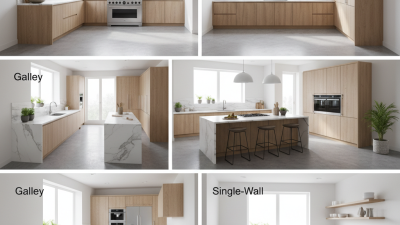
Choosing the right kitchen layout depends on room size, workflow, plumbing access, and local cooking habits. For global buyers, suppliers should provide accurate drawings, material specifications, and installation guidance. A single-wall kitchen places cabinets, appliances, and worktops along one wall. It suits compact apartments, studio units, and rental housing. Storage can be limited. Measure carefully.
A galley kitchen uses two parallel cabinet runs, creating a focused work corridor. It supports efficient movement between the sink, cooker, and refrigerator. This layout works well in narrow homes, staff kitchens, and compact hospitality spaces. However, crowded aisles may feel uncomfortable when two people cook together. Clearances should be checked before production. Small details matter.
L-shaped kitchens fit corner rooms and leave space for dining or a movable island. They are practical for family homes and open-plan interiors. U-shaped kitchens provide generous storage and continuous preparation areas. They need sufficient clearance, or the room may feel closed in. Island layouts encourage social cooking but require careful planning around walkways and doors. I have seen attractive plans fail because appliance doors blocked circulation. A revised drawing often prevents costly changes. Reliable suppliers should confirm hardware quality, moisture resistance, edge finishing, and carton protection. Buyers should also request production tolerances and assembly instructions. Even a good layout may need adjustment for regional electrical standards, ventilation rules, and user height.
Key Kitchen Layouts and Their Applications
The chart compares typical minimum circulation or work-aisle clearances used in kitchen planning. A 36-inch passage is commonly used for general movement, while 42 inches is recommended for a single-cook work aisle and 48 inches for areas used by multiple cooks. Actual requirements may vary according to local building codes, appliance dimensions, and project conditions.
How to Evaluate China-Based Kitchen Suppliers
China-based kitchen suppliers should be evaluated through evidence, not attractive catalogs.
Request a factory profile, production photos, export references, and recent quality records. A video call helps, but an independent factory audit is stronger. Check cabinet materials, edge sealing, hardware durability, moisture resistance, and dimensional tolerances. Details matter.
The 2023 World Bank Logistics Performance Index placed China 19th globally, with a score of 3.7. This indicates strong logistics capability, but it does not prove supplier reliability.
Confirm lead times using written production schedules and shipment records. Ask how defects are recorded, corrected, and prevented. Require a pre-shipment inspection with measurable standards. “Looks acceptable” is not a quality method.
The ISO Survey 2022 recorded more than 1.2 million ISO 9001 certificates worldwide. Certification can support process confidence, yet it should never replace direct verification. Review the certificate scope and issuing body. Compare the approved sample with mass-production units, including color, drilling positions, packaging, and installation instructions. Small differences can create expensive site problems. No checklist is perfect. Currency terms, replacement procedures, and after-sales response also deserve attention. A supplier may offer a low quotation, but unclear specifications can erase the saving. Use a trial order before committing to a large project.
Quality, Customization, Pricing, and Export Capabilities
China Best Kitchen Layout Suppliers for Global Buyers
Choosing a kitchen layout supplier requires more than comparing catalog photos. Quality appears in cabinet alignment, edge sealing, hardware movement, and surface resistance. Ask for material samples and inspect corners under strong light. Experienced suppliers should explain moisture protection, load limits, and installation tolerances clearly. Details matter. A reliable factory also provides drawings, inspection records, and packing photos before shipment. These documents reduce costly surprises.
Customization should include cabinet dimensions, countertop openings, colors, storage functions, and local appliance sizes. Good suppliers confirm measurements through technical drawings before production. Pricing must be compared by specification, not by headline quotation. Check material grades, hardware quantity, packaging, tooling, and installation support. A very low price can hide exclusions. I have seen attractive quotes change after revisions. That is why a written cost breakdown matters. Export capability also deserves close attention, including crate design, container loading, customs documents, and replacement procedures. No supplier is perfect. Communication quality remains an important warning sign.
Tips: Request one sample door, one hardware test, and a complete quotation. Confirm production lead time in writing. Check whether the supplier understands your destination’s safety and import requirements. Keep a signed drawing version. Small errors become expensive overseas._eta
Steps for Selecting a Reliable Global Supply Partner
China Best Kitchen Layout Suppliers for Global Buyers
Selecting a reliable kitchen layout supplier starts with verifying real production experience. Request factory photos, workshop videos, export records, and recent project references. A polished showroom can still hide weak quality control. Ask for evidence. Confirm whether the supplier designs layouts, manufactures cabinets, or only coordinates outside factories. This distinction affects pricing, responsibility, and delivery control.
Review material specifications in writing. Check board thickness, surface finishes, hardware grades, moisture resistance, and edge sealing methods. Request a sample cabinet door and inspect it under natural light. Measure alignment, drilling accuracy, and hinge movement. Test the details. Suppliers should provide clear drawings, packing lists, and inspection procedures before production begins. Independent inspections can reduce risk, especially for large orders.
Communication also deserves practical testing. Send a detailed kitchen plan with dimensions, appliance positions, and installation conditions. Reliable teams should identify missing information instead of guessing. Compare response time, technical questions, revision records, and English clarity. Ask about lead times, replacement parts, warranty handling, and shipping documents. A written contract should define tolerances, payment stages, packaging standards, and remedies for defects. I have learned that low pricing can distract buyers from installation delays and rework. That mistake is expensive. Small trial orders and staged inspections offer a more honest view of supplier performance.